Product comparison
Harvest Pure or vinegar: how should you wash your produce?
Harvest Pure vs a vinegar soak: how each is used for washing fruit and vegetables, what each leaves behind and what each costs per wash.
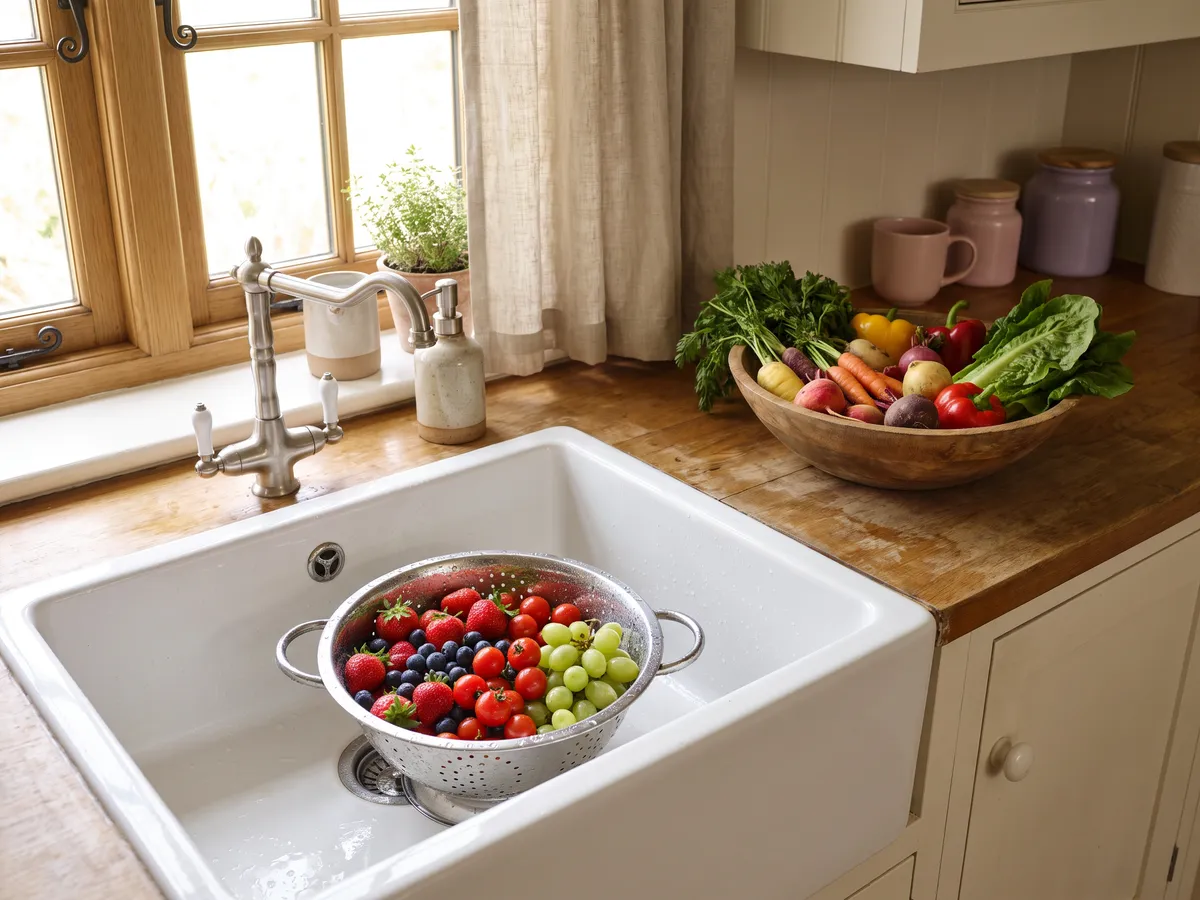
Harvest Pure and a gallon of white vinegar
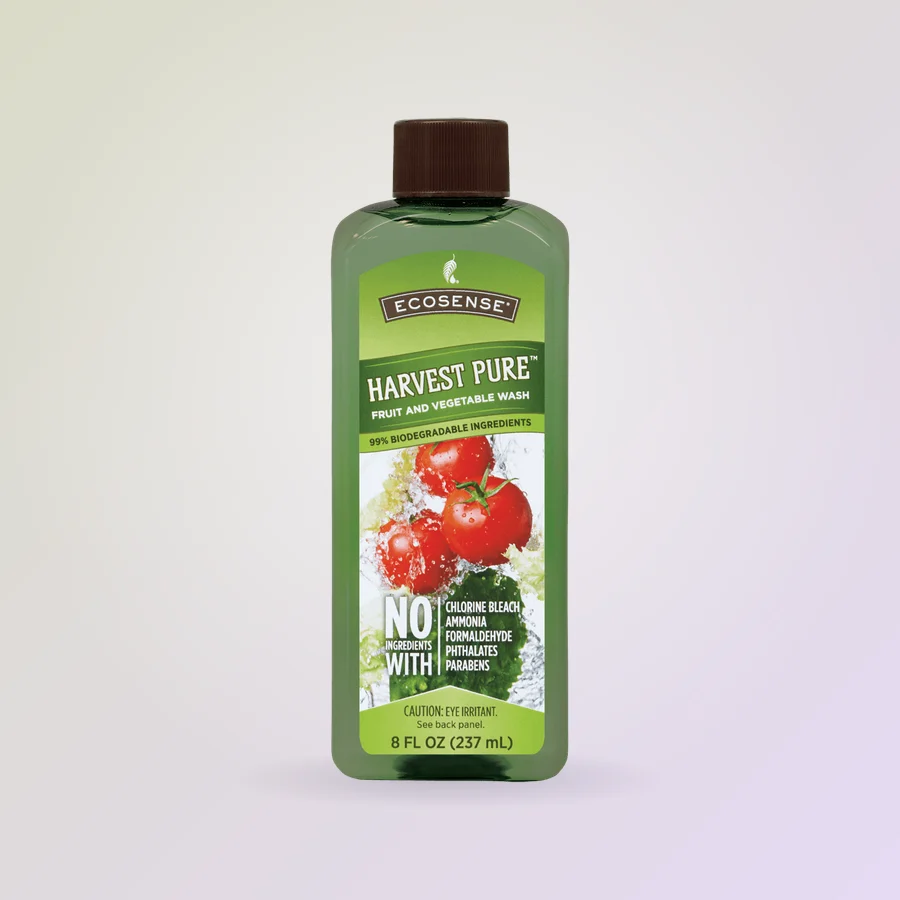
Melaleuca Harvest Pure Fruit & Vegetable Wash. Photo: melaleuca.com 
Store-brand distilled white vinegar (illustration)
This page compares Melaleuca's Harvest Pure Fruit and Vegetable Wash with a homemade vinegar soak, the two common options beyond plain water. Harvest Pure is a ready-made rinse at $6.99 for 8 oz at the member price, and a $4.59 gallon of store-brand vinegar makes 32 soaks.
Food-safety agencies start with plain running water. The FDA says to wash produce "under running water."
| Melaleuca Harvest Pure | Vinegar soak | |
|---|---|---|
| What it is | A commercial fruit and vegetable wash | White distilled vinegar from your pantry |
| Size and price | 8 oz bottle: $10.00 regular / $6.99 member (melaleuca.com) | Store-brand gallon $4.59; 64 oz $3.39 |
| How you use it | Follow the bottle's directions | 1/2 cup vinegar to 2 cups water, per NDSU Extension |
| Taste afterward | Melaleuca says no unpleasant aftertaste | Can leave a pickle taste, per NDSU Extension |
What do food-safety experts recommend?
NDSU Extension food and nutrition specialist Julie Garden-Robinson puts it plainly: "plain, cold water from your tap is the usual recommendation for rinsing produce." For leafy greens, she describes soaking them for a couple of minutes in clean water, then draining and rinsing them.
For thick or netted skins, such as cantaloupe, she suggests a vegetable brush to help remove soil. If you soak greens in the sink rather than a bowl, clean the sink first.
What does Melaleuca say Harvest Pure does?
Melaleuca says Harvest Pure Fruit and Vegetable Wash uses "biodegradable food-safe ingredients" that wash "away pesticide residues, dirt, grime, and more from fresh fruits and vegetables." The company also says it "rinses off easily, leaving the nutrient-dense peels of produce intact with no unpleasant aftertaste." Melaleuca's own site gives the product a 4.8-star rating. Follow the bottle's directions for mixing and use.
Does a vinegar soak work?
NDSU Extension addresses vinegar directly: a soak of half a cup of vinegar to two cups of water "will reduce bacteria but not eliminate it."
Flavor is the other thing to consider. The same column warns that a vinegar-water soak "could make your produce taste like pickles." Many households don't mind on sturdy items like apples or grapes. With berries or tender greens, test a few before soaking the whole pint, and rinse well with plain water afterward.
What does each one cost?
Shelf prices change, so check your store for current pricing.
Harvest Pure comes in an 8 oz bottle. The regular price on melaleuca.com is $10.00, and the member price is $6.99. Check the bottle's directions to work out how many batches of wash one bottle makes.
A store-brand gallon of white distilled vinegar runs $4.59 at a major retailer. A 64 oz bottle is $3.39. At half a cup per soak, a gallon makes 32 batches.
Who is each one for?
Beyond plain water, the choice comes down to how you like to work in the kitchen.
The vinegar soak suits a home that would rather use a pantry staple than buy another bottle. If you keep white distilled vinegar on hand, the half-cup-to-two-cups ratio is easy to follow. The main trade-off is flavor, so rinse well and go easy with delicate berries.
Harvest Pure suits a household that wants a dedicated produce rinse, mixed according to the bottle's directions. Melaleuca describes its formula as biodegradable and food-safe, and says it rinses off easily with no unpleasant aftertaste.
Common questions about washing produce
Is plain water really enough? According to the FDA, running water is where you start. NDSU Extension adds that a short soak in clean water helps with leafy greens, and a brush helps with thick, netted skins like cantaloupe.
Can I use dish soap on fruit? The FDA says washing produce with soap or detergent is not recommended.
Should I wash produce before I store it? Many people rinse right before eating instead, so the fruit stays dry in the fridge. Check the FDA's produce-safety page for its full list of tips.
For more side-by-side looks at Melaleuca products, see all the Melaleuca comparisons.
Sources
- Prairie Fare: What is the Best Way to Clean Fresh Veggies? (NDSU Extension)
- Selecting and Serving Produce Safely (FDA)
- Harvest Pure Fruit & Vegetable Wash, Melaleuca
